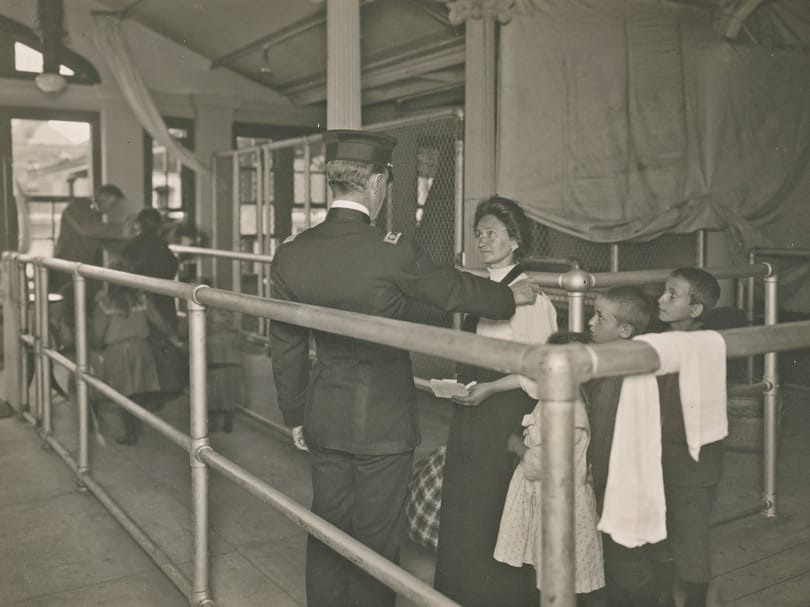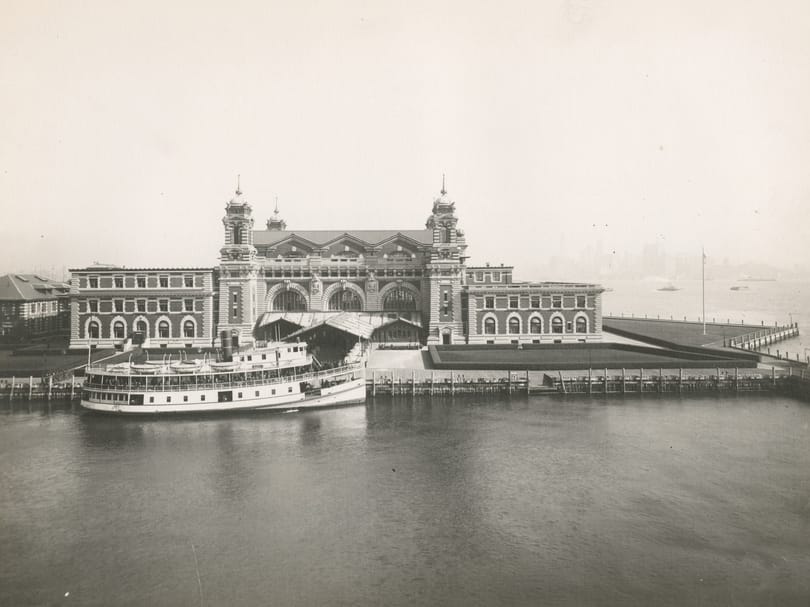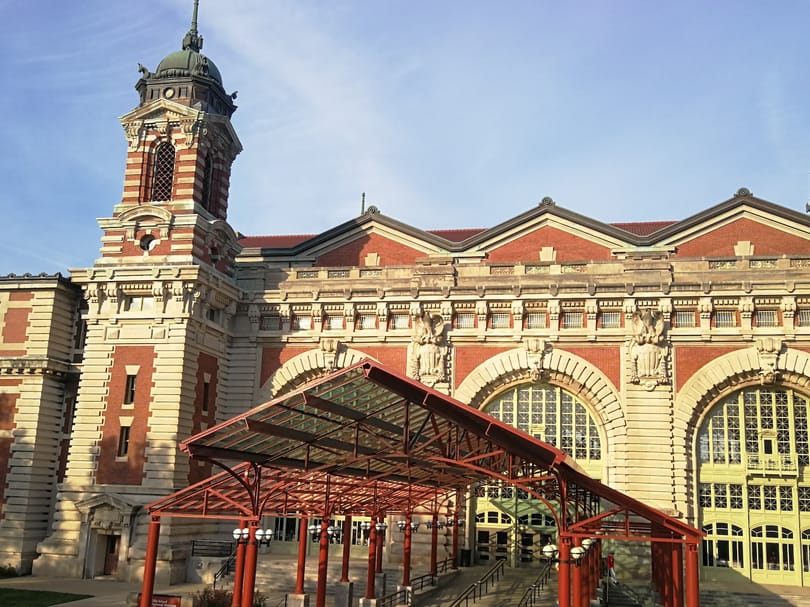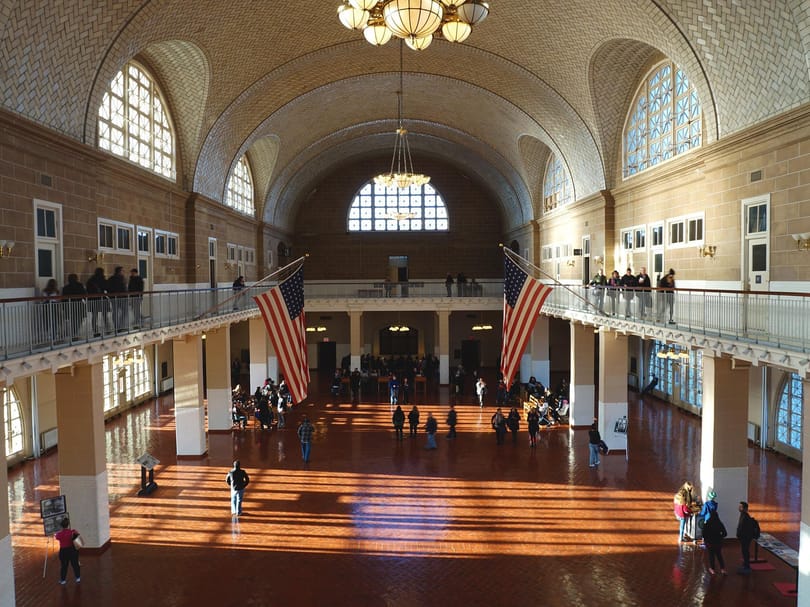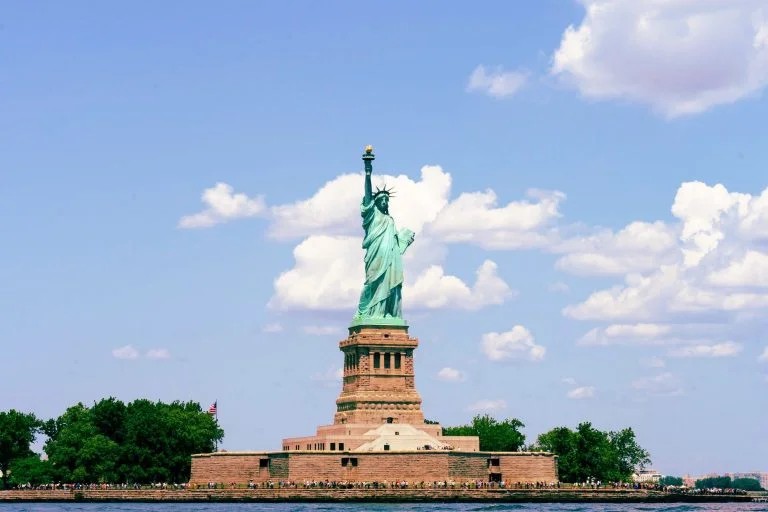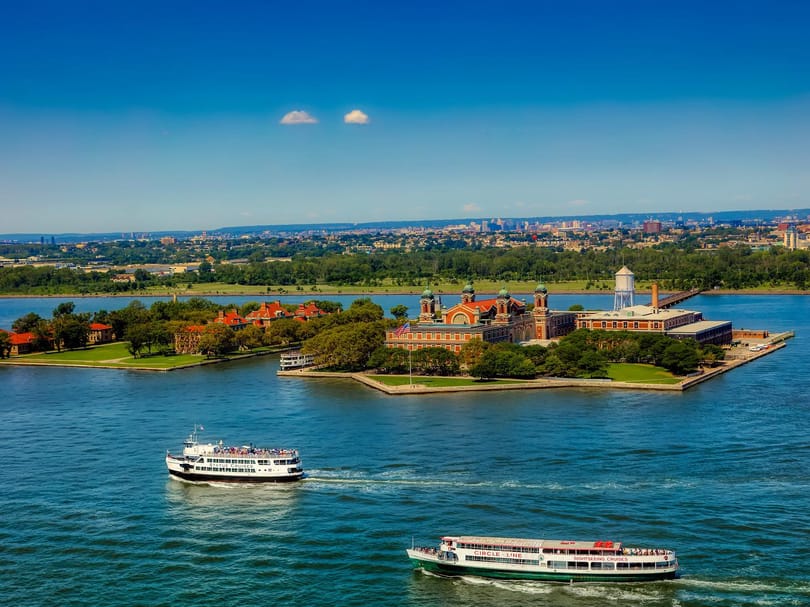
Ellis Island is an island in New York Harbor long known as an immigration station landmark. Millions of visitors have toured Ellis Island in search of their ancestors’ past travels, and it’s still one of the major attractions in New York City today. The history behind the island is rich and fascinating, so today, we’ll take a look at just that — a complete timeline of Ellis Island, past and present.
Here’s what it took to create the Ellis Island we see today.
Before 1,000 A.D.
The earliest known history of Ellis Island dates to the 10th century. Members of the Algonquin people lived on the island, harvesting shellfish, hunting small game, and creating pottery and other items that would later become artifacts to tell their story.
Archeologists have conducted a number of excavations on Ellis Island (and Liberty Island). Combined, they have a catalog of over 18,000 artifacts, many dating to the earliest known habitation of the island when it was governed by Native Americans.
1630-1730
Before Ellis Island was known by that name, it had several other names, starting with Kioshk (Gull Island), given by the Mohegan Indians who lived nearby.
Then in 1630, the island was bought by a Dutchman named Michael Paauw. He referred to it as Oyster Island since many shellfish washed ashore there. Soon, it became known as the go-to spot to enjoy freshly shucked oysters.
Around 1674, Captain William Dyre (later mayor of New York City) was given the island by the English colonial governor of New York. Naturally, he calls it Dyre’s Island. He later sells the island to Thomas and Patience Lloyd in the late 1600s. In the 16th century, it undergoes even more name changes as it’s passed around. It’s known as Bucking Island and later Anderson’s Island.
1760s
The island later changed its name to Gibbet Island after men who were convicted of piracy were continuously hanged there from the gibbet (or gallows) tree.
1770s
Samuel Ellis, a merchant in New York, bought the island during this time period and referred to it by its former name, Oyster Island. He built a tavern on the island to create a local hangout for fishermen.
1808
A few years after 1794, when Ellis died, New York State purchased the island for $10,000. The U.S. War Department began building fortifications on the island while also using it to store ammunition for the military.
1861-1865 (American Civil War)
During the Civil War between the United States and the Confederacy, Ellis Island was used as a site to store arms and ammunition for the Union army.
1865-1892
Ellis Island was no longer occupied once the Civil War ended, but the federal government had noticed it. In 1890, it put $75,000 into the construction of the very first federal immigration station to be built on the island.