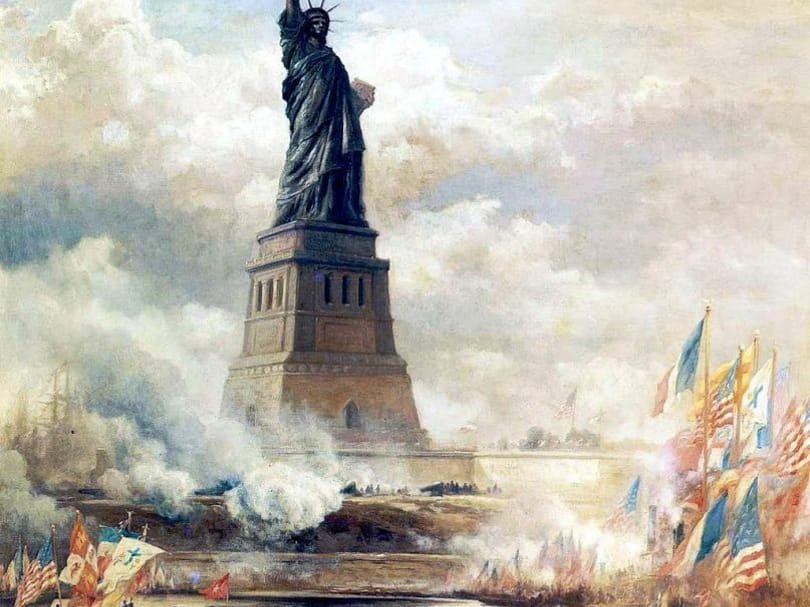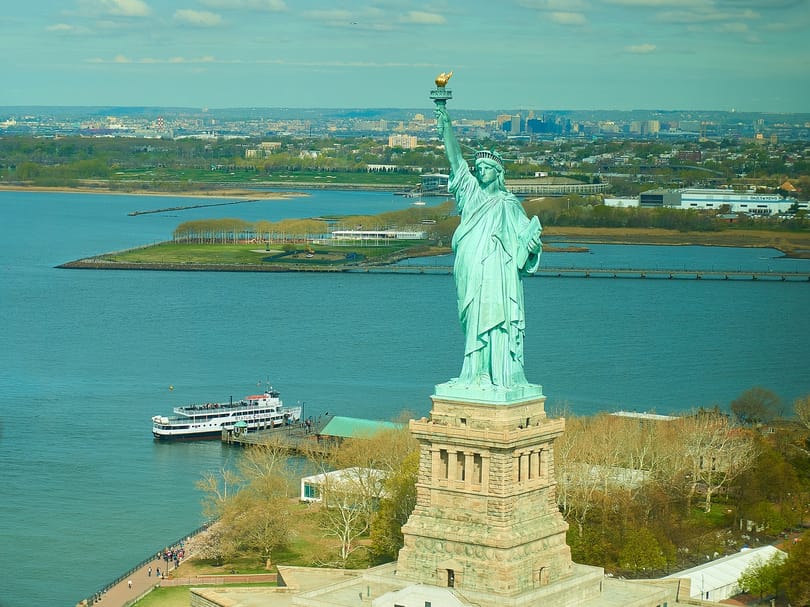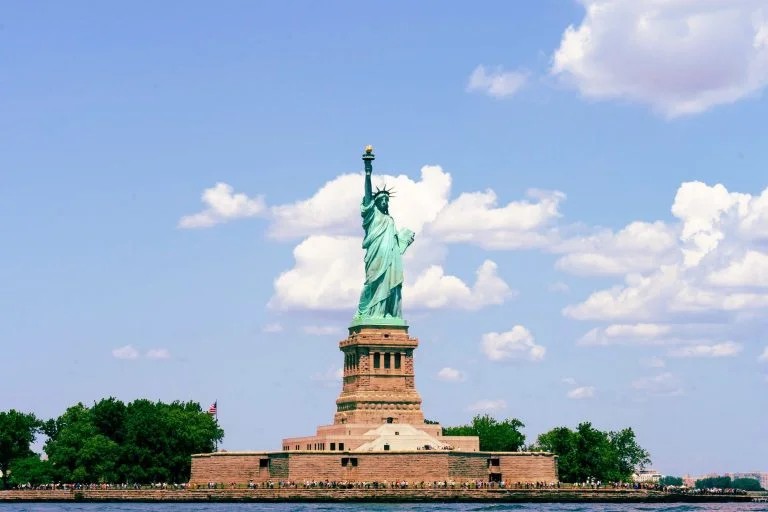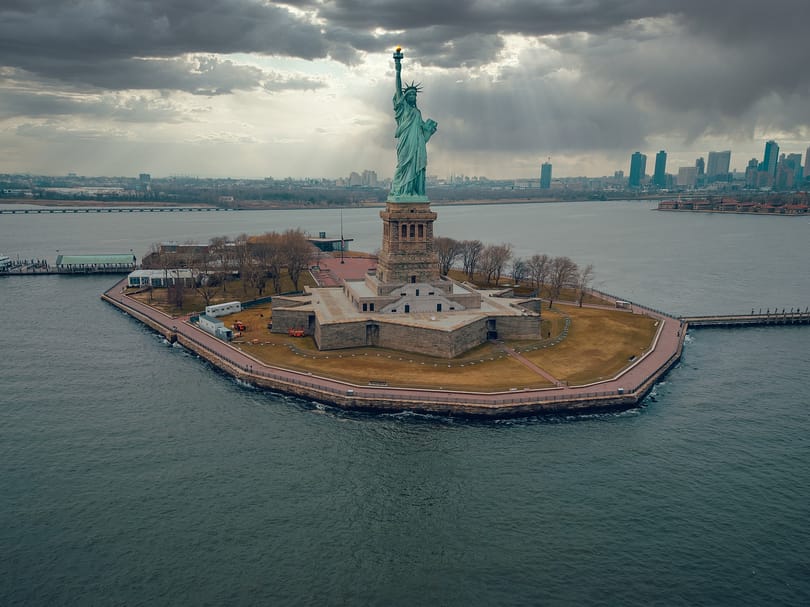
When the idea for the Statue of Liberty was first conceived, many people were critical and even more were skeptical. Over 130 years later, the statue still stands, and it serves as a beacon of hope and a living symbol of freedom to millions of people around the world. In this post, we’ll break down that journey step by step as we explore the complete history of Lady Liberty.
1865
During an after-dinner discussion, French politician and abolitionist Edouard de Laboulaye proposed that his country should gift a statue to the United States for the centennial celebration of the Declaration of Independence. The recent Union victory in the Civil War reaffirmed Laboulaye of the country’s ideals of freedom and democracy. He felt that showing public support for the U.S. would also strengthen the fight for democracy in France.
1870
Laboulaye turns to Auguste Bartholdi, a young, French sculptor who is both supportive of Laboulaye’s proposal and fascinated by colossal statues. In 1870, he created the first models of his concept. Considering how to best express the idea of liberty, he chooses a female figure cloaked in robes, striding over a broken chain. In her right hand, a torch to represent progress. In her left, a tablet inscribed with the date of the Declaration, evoking the concept of the law.
1871
In order to promote the statue and decide on a site, Bartholdi visited the U.S. in June of 1871. He chooses Bedloe’s Island, in New York Harbor, as the location. He also meets with multiple American politicians and publishers who he believes will be supportive to his project.
1875
Laboulaye approves Bartholdi’s plaster model of the statue’s design. They refer to it as “Liberty Enlightning the World”. In September, the project was announced and the Franco-American Union was formed to oversee fundraising for the statue. It is agreed that the French will fund the statue if the people of America fund the pedestal.
1876
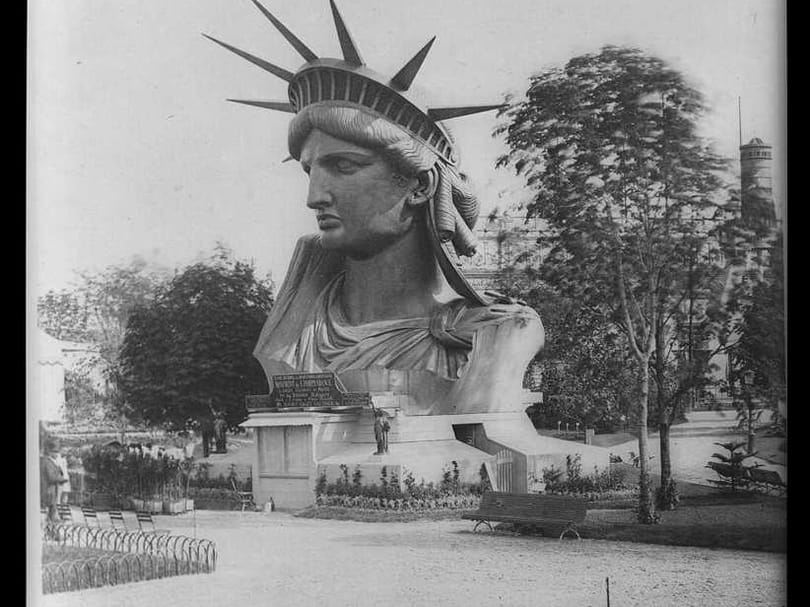
Construction for the statue begins at the Gaget, Gauthier & Co, workshop. In May, her right hand and torch were sent to the United States and displayed at the Centennial Exposition in Philadelphia. Visitors could even climb up to the balcony of the torch.
1877
After the exhibition in Philadelphia closed, the arm was moved to New York and displayed in Madison Square Park. It stayed for several years (until 1882) and was then brought back to France to join the rest of the statue. That same year, the United States began fundraising for the construction of the pedestal.